How a Kinetic Lock Works: Self-Powered Unlocking Explained
One turn of the handle powers a kinetic lock from end to end. This expert Q&A explains the generator, the instant use of energy, handshake-free authentication and the unlock.
- #Kinetic Lock
- #Energy Harvesting
- #Self-powered Lock
- #Battery-free Smart Lock
- #Authentication
- #Bluetooth
Even a lock without a battery still has to think. It must check who is asking, decide, and then move a mechanism. A kinetic lock does all of this on the energy of one turn of the handle. We put the most common engineering questions about how a kinetic lock works to our technical team.
Q: Where does the electricity come from?
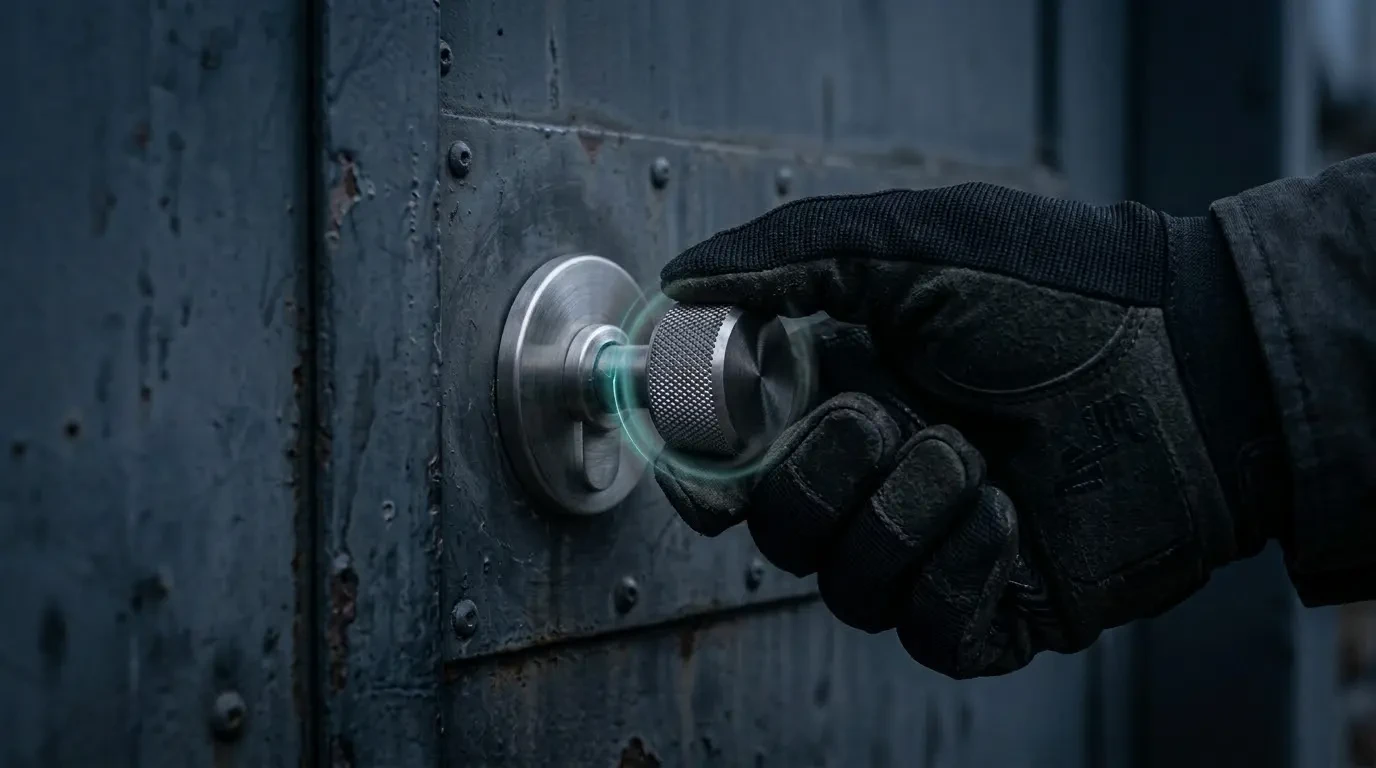
A: From the user's hand. Turning the handle drives a small generator inside the lock, which converts the mechanical energy of the turn into electrical energy. Kinetic generation in general relies on electromagnetic induction: under Faraday's law, a changing magnetic flux induces a voltage, as LibreTexts' physics course explains.
Q: Is one turn really enough energy?
A: It is small, measured in microjoules, but electronics designed for it need very little. For scale, an EnOcean data sheet for a comparable electrodynamic converter lists 120 to 210 µJ per actuation, enough to send three short radio telegrams.
Q: Is the energy stored first?
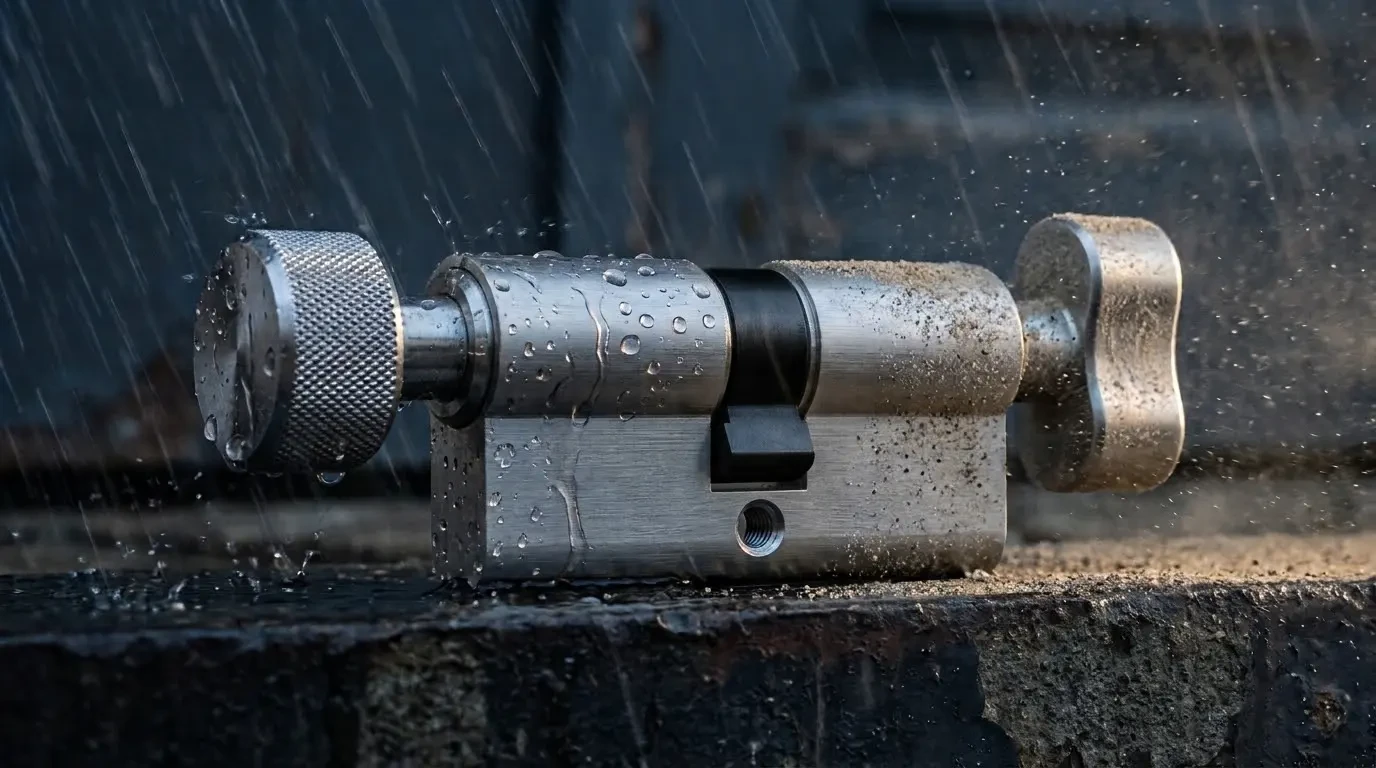
A: No. Our Kinetic Lock has no energy-storage battery or supercapacitor. After rectification, the electricity goes straight into establishing communication, completing authentication and driving the motor that unlocks the lock, all within the same turn. With nothing inside to drain, leak or age, the lock body is rated from -40 °C to +80 °C at IP68.
Q: How does authentication run on so little power?
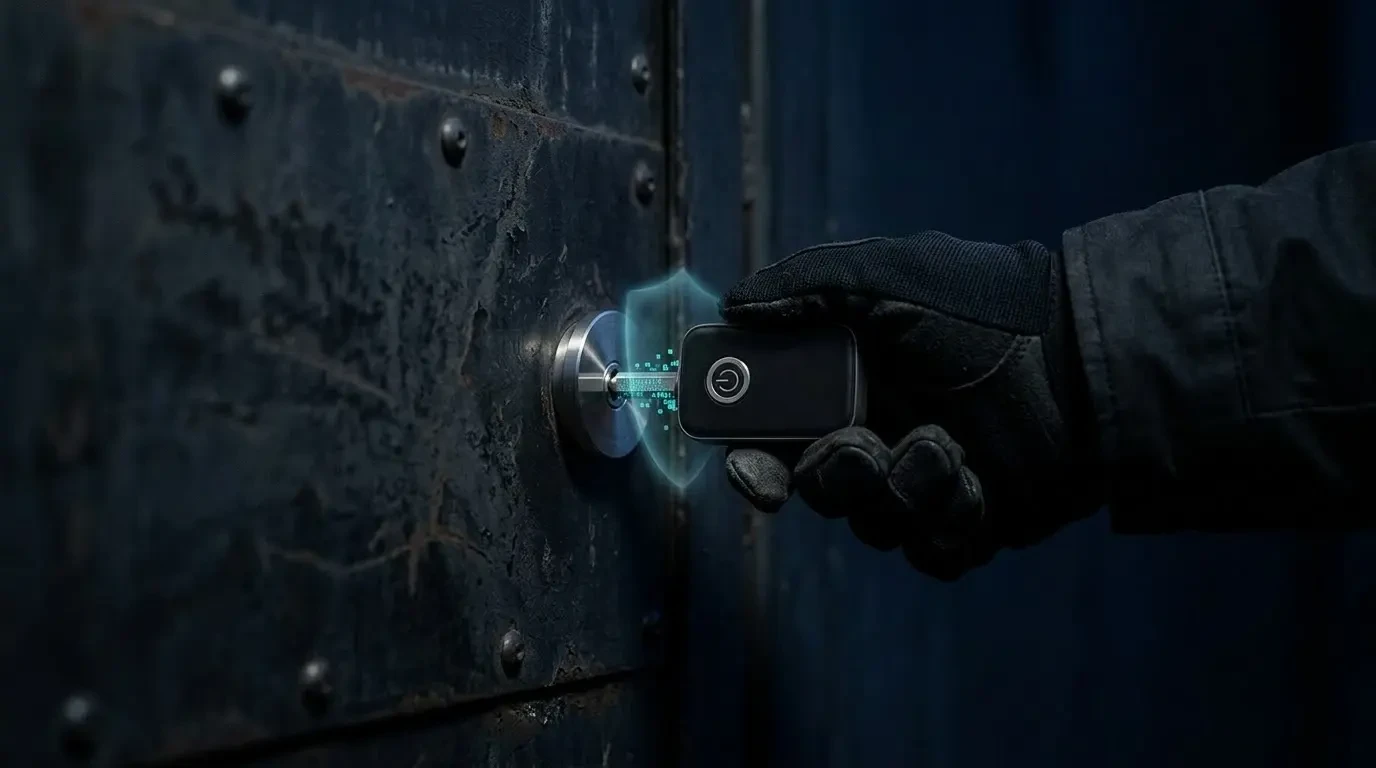
A: The authentication circuit talks to the user's phone over the Bluetooth frequency band, but not through a standard Bluetooth connection. Standard Bluetooth Low Energy must first discover a device before it can connect and exchange data, and the expected discovery time depends on the advertising interval and scanning duty cycle, according to researchers at Aalto University and Nokia. One turn of a handle cannot fund that overhead. Our lock instead uses a proprietary, handshake-free encrypted protocol with AES-128 or stronger encryption. That keeps energy use and latency lower than standard Bluetooth can reach.
Q: What happens once the credential is accepted?
A: Once authentication passes, the motor acts, and the user simply keeps turning to open the lock. Energy harvesting, authentication and unlocking are typically completed within 3 seconds, and the lock is rated for at least 10,000 unlocking cycles.
Q: What are the trade-offs?
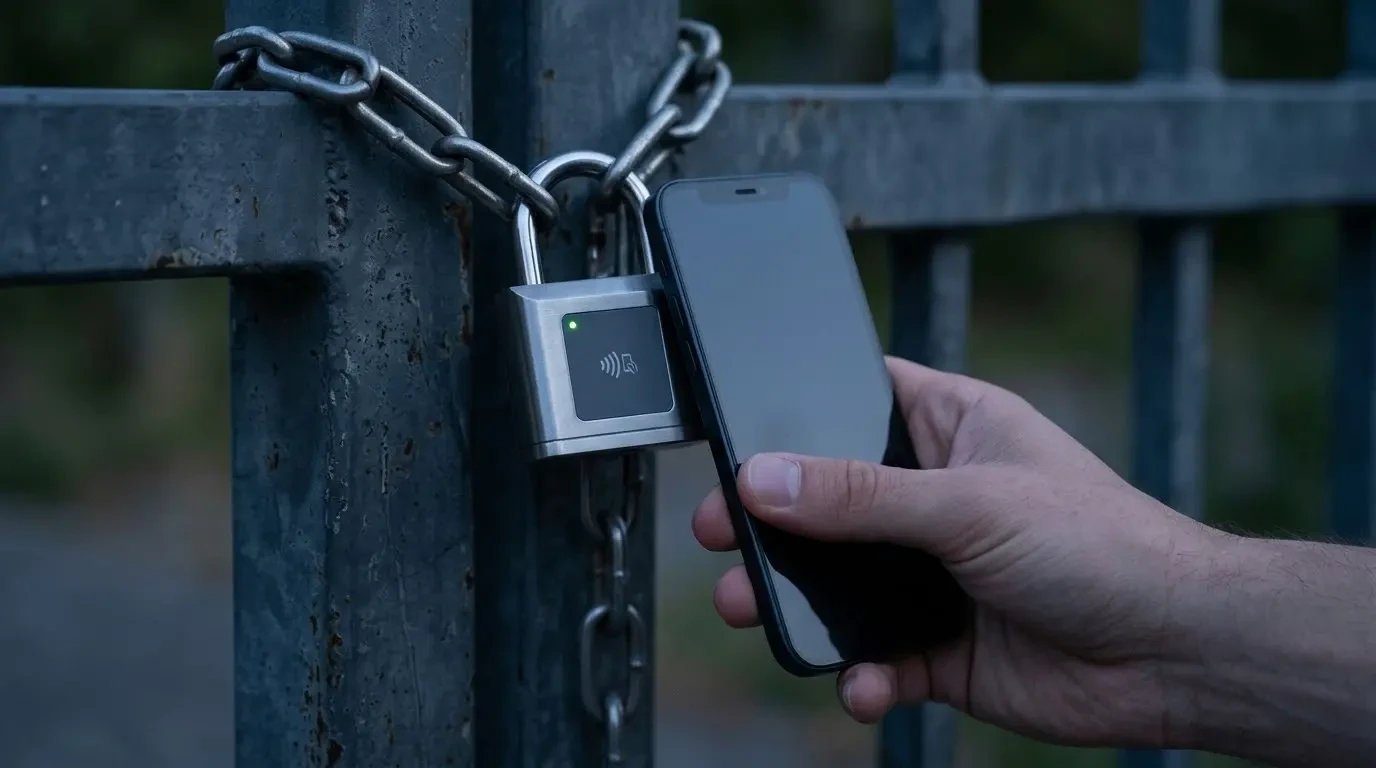
A: Every opening needs a Bluetooth-enabled phone running the companion app, so plan credentials for contractors and spare devices for field teams.
Where a Kinetic Lock Fits
A kinetic lock suits doors and cabinets where nobody wants to schedule battery swaps: remote, unattended or exposed sites. Contact us to assess where self-powered access fits your estate.
Sources
1. Faraday's Law: Electricity from Magnetism and Force — LibreTexts — chem.libretexts.org/…/8.08:_Faraday's_Law-_Elect… 2. ECO 200 Energy Harvester Data Sheet — EnOcean — https://docs.rs-online.com/80d0/0900766b8123eb69.pdf 3. How Low Energy is Bluetooth Low Energy? Comparative Measurements with ZigBee/802.15.4 — Siekkinen et al., Aalto University and Nokia Research Center — https://users.aalto.fi/~siekkine/pub/siekkinen12ble.pdf