AES-128 Lock Authentication: 3 Myths About Unlock Security
AES-128 keeps the brief wireless exchange behind every battery-free unlock private. Three common myths about lock encryption, replay attacks and low-power cryptography, debunked.
- #AES-128
- #Encryption
- #Authentication
- #Battery-free Smart Lock
- #Access Control
- #Cybersecurity
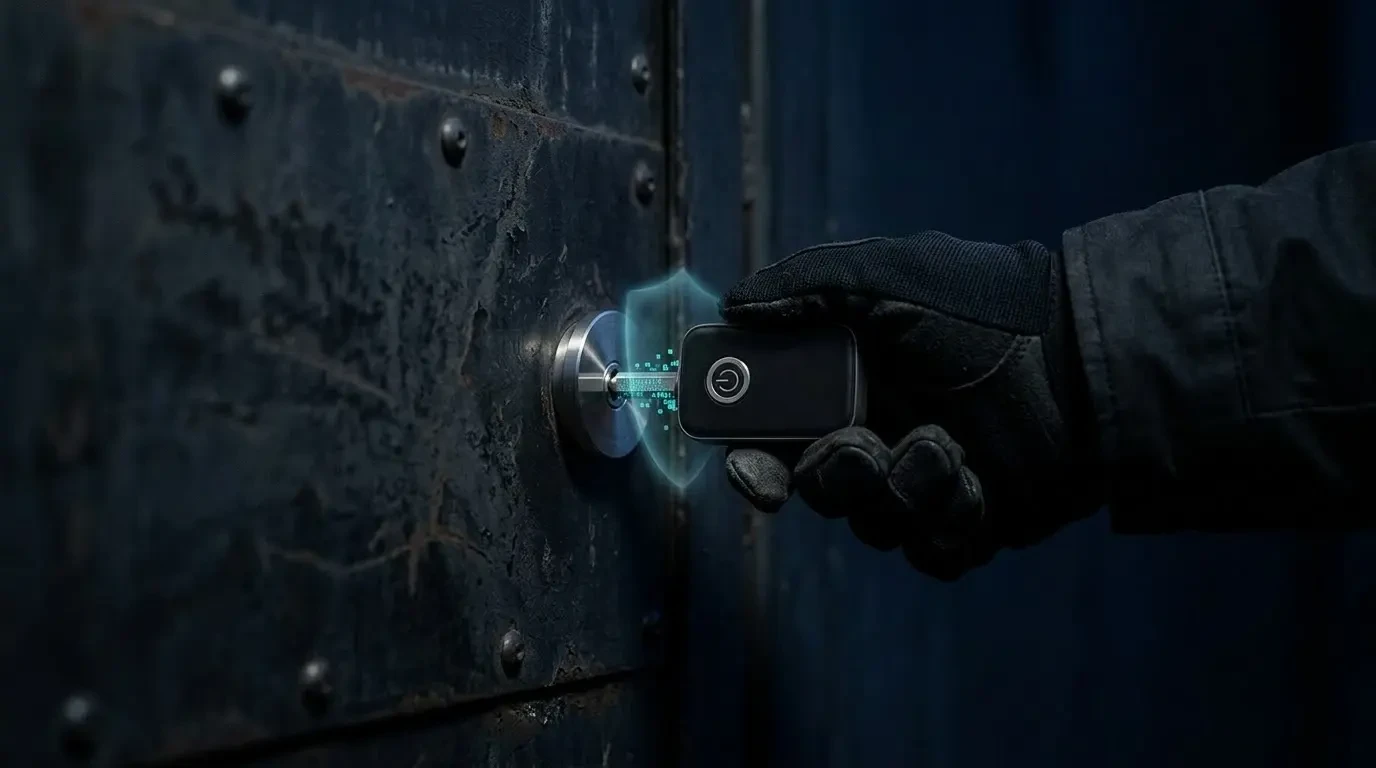
Every battery-free lock opening is a short wireless conversation: the key or phone proves it is authorized, and the lock decides whether to open. If that exchange can be read, copied or replayed, the lock is only as strong as its weakest radio moment. AES-128 lock authentication is what keeps that conversation private and trustworthy.
Myth 1: "128-bit encryption is too weak for security hardware"
Fact: AES is the NIST-standardized block cipher, with a 128-bit block and key lengths of 128, 192 or 256 bits, as NIST's AES publication sets out. NIST's draft transition guidance even raises the minimum security strength from 112 to 128 bits by the end of 2030, according to IBM's review of the draft. AES-128 sits at that bar today, and our locks use AES-128 or stronger.
Myth 2: "If the message is encrypted, nobody can reuse it"
Fact: Encryption hides content, but a captured message could still be replayed. Good protocols defeat that with a challenge-response exchange: the verifier sends a fresh random challenge, and the claimant proves it holds the secret by combining it with that challenge, as NIST's glossary defines it. Because each challenge is new, yesterday's recording is worthless today. When you evaluate any lock, ask how it prevents replay.
Myth 3: "A battery-free lock can't afford real cryptography"
Fact: AES is efficient enough to run on the brief energy a battery-free lock harvests. Energy harvesting, authentication and unlocking are typically completed within 3 seconds, whether the energy comes from an Electronic Key, an NFC phone or the turn of a handle. And because there is no battery in the lock body, its electronics sit unpowered between openings, leaving no always-on radio for an attacker to probe.
Putting AES-128 Lock Authentication to Work
Strong ciphers still depend on good key management. Issue unique credentials, revoke a lost Electronic Key or phone credential the same day and review access rights regularly. Contact us to review how your locks protect every unlock.
Sources
1. Advanced Encryption Standard (AES) — NIST — www.nist.gov/…/advanced-encryption-standa… 2. Exploring NIST's Latest Guidance on Transitioning Cryptographic Algorithms and Key Lengths — IBM Crypto Education Community — community.ibm.com/…/exploring-nists-latest-gui… 3. Challenge-Response Protocol — NIST CSRC Glossary — https://csrc.nist.gov/glossary/term/Challenge_Response_Protocol