IP Rating Explained: IP54 vs IP65 vs IP68 for Smart Locks
IP54, IP65 or IP68? A step-by-step guide to reading the IEC 60529 IP code, matching it to real locations and knowing where each lock type stands.
- #IP Rating
- #IEC 60529
- #Waterproof
- #Smart Lock
- #Battery-free Smart Lock
- #Selection Guide
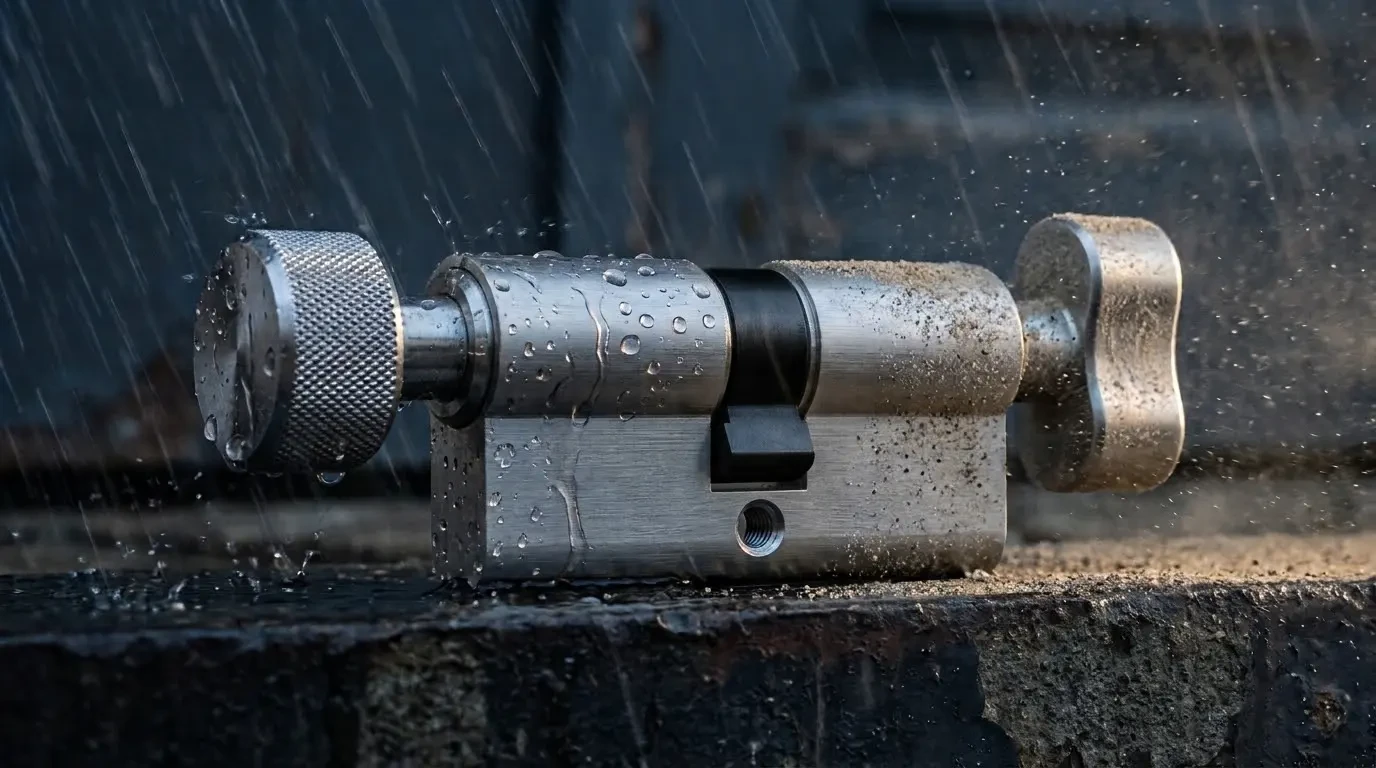
Two locks can look identical on a spec sheet until you reach one short line: IP54, IP65 or IP68. That code decides whether a lock shrugs off a dusty corridor, a driving rainstorm or a flooded cable pit. Here is how to read an IP rating for smart locks, step by step, and match it to where each lock will live.
Step 1: Read the Two Digits
IP stands for Ingress Protection, defined by IEC 60529. The first digit rates protection against solids from 0 to 6, and the second rates protection against water from 0 to 8, as Cross Company's guide to the standard explains. The levels that matter most for locks:
| Digit | Meaning |
|---|---|
| First digit 5 | Dust protected: some dust may enter, but not enough to affect operation |
| First digit 6 | Dust tight: no dust ingress |
| Second digit 4 | Splashing water from any direction |
| Second digit 5 | Water jets from any direction |
| Second digit 7 | Temporary immersion up to 1 m |
| Second digit 8 | Continuous immersion beyond 1 m, under conditions the manufacturer specifies |
That last point matters. IPX7 testing is typically 1 m for 30 minutes, while IPX8 depth and duration are set by the manufacturer or a test plan, according to D.L.S. Electronic Systems. When you see IP68, ask for the tested conditions.
Step 2: Match the Rating to the Location
- IP54 suits indoor and sheltered doors: dust and occasional splashes, but no driving rain.
- IP65 suits outdoor cabinets and doors exposed to rain, hosing and fine dust.
- IP68 suits pits, low-lying sites, coastal and washdown areas, and anywhere water can pool around the lock.
Immersion and jet tests are different tests. If a site sees pressure washing, confirm the specification covers jets as well as immersion.
Step 3: Know Where Each of Our Products Sits
- Home smart door locks: IP54 as standard, with higher-protection options available.
- Electronic Keys and NFC Locks: IP65 as standard, with an IP68 option. Both are rated from -20 °C to +55 °C.
- Passive Locks and Kinetic Locks: IP68 as standard. With no battery or capacitor inside the lock body, they are also rated from -40 °C to +80 °C, so harsh-environment protection is built into the default design.
Choosing the Right IP Rating for Smart Locks
Start with the worst day the door will see, not the average one, then pick the rating that covers it. Contact us to match the right protection level to each of your sites.
Sources
1. IP Code Ratings Defined — Cross Company — https://www.crossco.com/resources/articles/ip-code-ratings/ 2. IPX7 and IPX8 Immersion Testing — D.L.S. Electronic Systems — https://www.dlsemc.com/ipx7-and-ipx8-immersion-testing/