Passive Lock Electronic Key: How It Powers and Authenticates
A Passive Lock has no battery. This step-by-step guide explains how the Electronic Key is authorized in the app, then powers and authenticates the lock core through a single contact.
- #Passive Lock
- #Electronic Key
- #Battery-Free Smart Lock
- #BLE
- #AES-128
- #LiFePO4
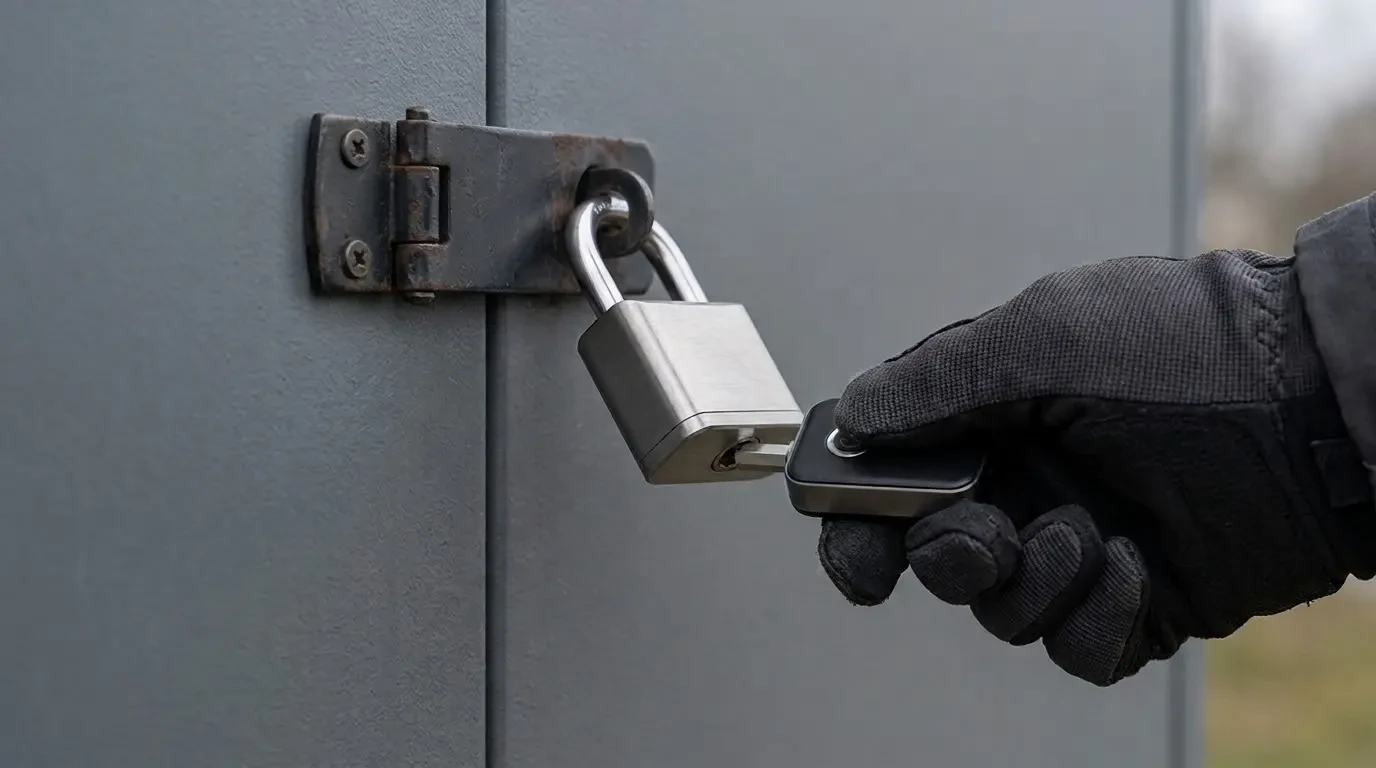
A Passive Lock carries no battery and no capacitor in its body, so on its own it is inert. Everything it needs to open, both power and a verified credential, arrives from the passive lock electronic key at the moment of contact. Here is how that works, step by step.
Step 1: Authorize the Electronic Key in the Mobile App
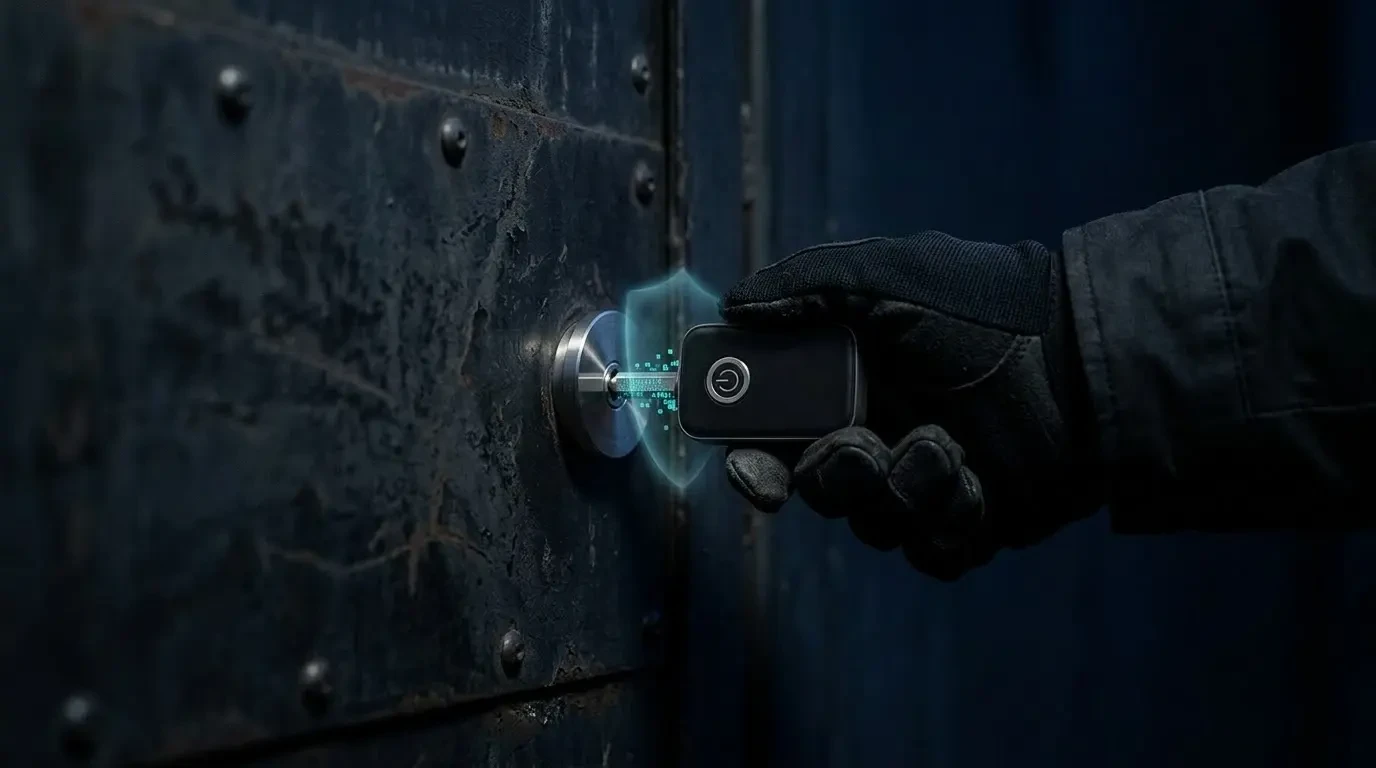
Before heading to site, the user pairs the Electronic Key with the Mobile App over standard Bluetooth Low Energy (BLE), and the key receives its operation authorization from the app. In standard BLE, pairing gives both devices a shared key, and the link is then encrypted with AES-CCM, as NIST's Guide to Bluetooth Security explains. The link between our key and the app uses AES-128 or stronger encryption.
Step 2: Touch the Key to the Lock Core
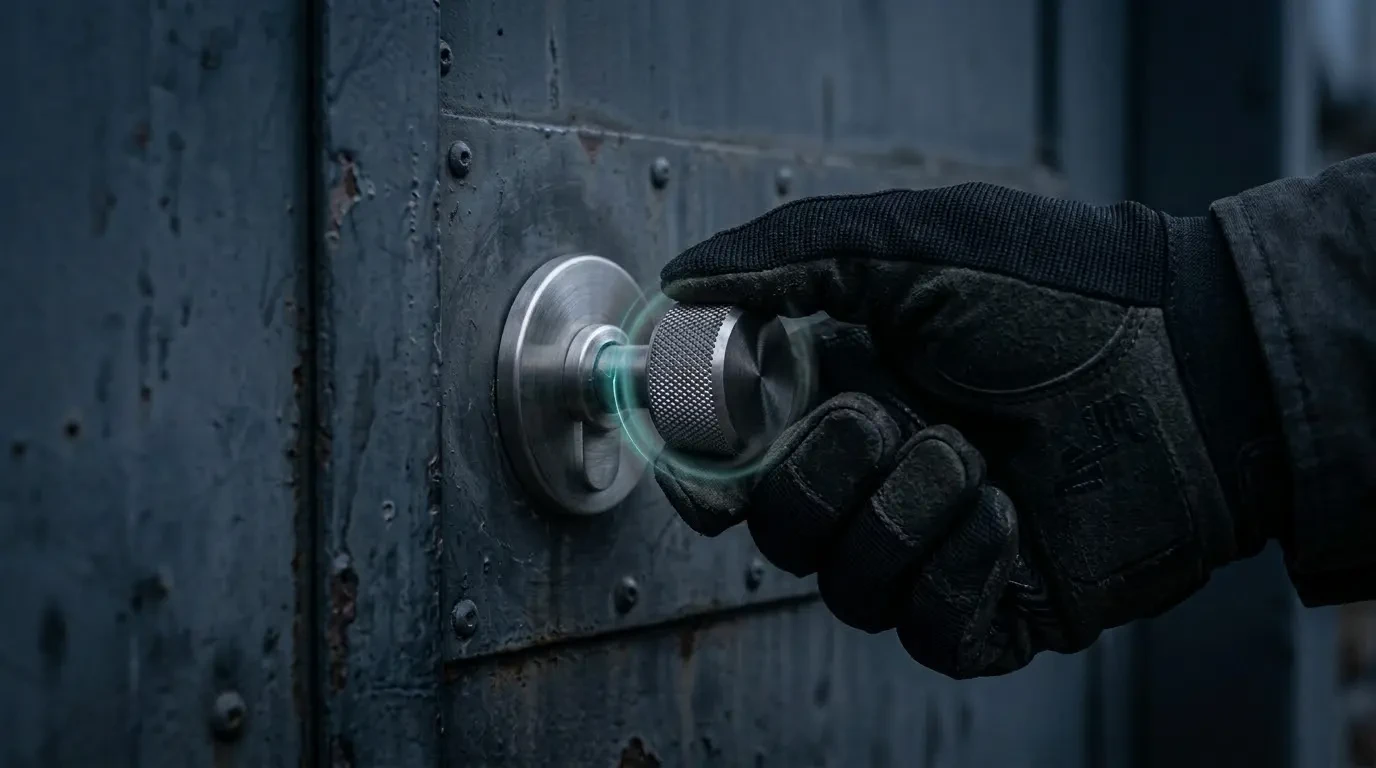
Contact is when the lock comes alive. The Electronic Key and the Passive Lock core connect through a single contact that carries both power and data. The principle is similar to power line communication, where a data signal rides on the same conductor that delivers power, as an overview of power line communication describes. Because power and data share one path, the interface between key and lock stays simple.
Step 3: Authenticate and Unlock Within 3 Seconds
The key and the lock core then verify each other over that same contact, again protected by AES-128 or stronger encryption. With an authorized key, the lock can be operated within 3 seconds of contact. With no battery to fail, the lock body is rated from -40 °C to +80 °C at IP68 and for at least 10,000 unlocking cycles.
What Powers the Electronic Key Itself
The Electronic Key carries a rechargeable lithium iron phosphate (LiFePO4) battery and supports at least 1,000 Passive Lock operations per full charge. The chemistry is valued for its thermal stability: in a comparison of four lithium-ion cathode materials published in Frontiers in Chemistry, the lithium iron phosphate cell showed the lowest thermal runaway risk. The key is rated from -20 °C to +55 °C at IP65 as standard. Each key can be paired with 65,000+ locks and stores at least 1,000 operation records offline, so an audit trail survives even where sites have no network.
The trade-off is key management. Keys must be issued, recovered and recharged, so build charging into shift handover and keep spares at the depot.
Getting the Most From a Passive Lock Electronic Key
Concentrate the energy, the credentials and the audit trail in the key, and the lock in the field can stay simple, sealed and maintenance-free. Contact us to plan an Electronic Key and Passive Lock rollout for your sites.
Sources
1. Guide to Bluetooth Security (SP 800-121 Rev. 2) — National Institute of Standards and Technology
2. Power Line Communication (PLC) Overview — Chiuţă and Stancu, Academy of Romanian Scientists
3. Influence of Cathode Materials on Thermal Characteristics of Lithium-Ion Batteries — Frontiers in Chemistry